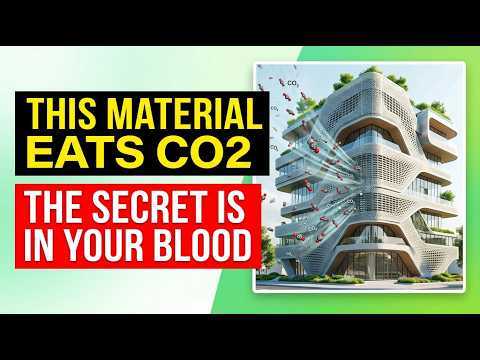
Take: Why Concrete Is the World’s Biggest Carbon Trap
Take on a YouTube video from The Odd Vault, originally posted 2026-08-31. Watch the source: https://www.youtube.com/watch?v=hltbVu1tsQM TL;DR Claims Worcester Polytechnic Institute’s enzymatic structural material (ESM) sequesters “more than 6 kg CO2 per cubic meter” vs. concrete’s ~330 kg emitted. If true, small net-negative delta per m³ — worth checking the primary source. Mechanism: carbonic anhydrase enzyme mineralizes CO2 into calcite that binds sand into a structural matrix. Legit chemistry, not new — Rahbar’s group has been publishing on this since ~2019. Name-drops UK startup Eureka (Strathclyde spin-off) using plant-derived enzymes and sourcing CO2 from distilleries/biogas. Useful pointer if verifiable. Frames ESM as “no sacrifice” drop-in replacement for concrete. Overstated — no mention of compressive strength, cost, or scale of production demonstrated. Cement = ~8% of global CO2 figure is correctly cited. Video link. This is an 8-minute explainer from The Odd Vault, a general-audience science channel, pitching enzymatic biocementation — specifically Nima Rahbar’s ESM at WPI — as a carbon-negative alternative to Portland cement. The core claim: an enzyme (carbonic anhydrase) catalyzes CO2 + calcium + water into calcite crystals that bind sand into a structural matrix, curing in hours and net-sequestering carbon. ...