Take on a YouTube video from Local Land Services NSW, originally posted 2026-07-20. Watch the source: https://www.youtube.com/watch?v=mx6J74S07xk
TL;DR
- Australia still has no domestic biochar carbon method; producers must use international registries like Puro.earth. Practical confirmation from a state advisor, not news.
- Cited spread: biochar credits at ~AU$150–200/tonne vs Australian Carbon Credit Units at ~AU$40–50. Useful anchor for Australian project economics.
- Biochar application is eligible inside Australian soil carbon projects — but capped at 100 kg/ha/yr unless biomass is on-farm or from a designated waste stream.
- Applied biochar carbon must be deducted from measured soil carbon stock gains. A detail many farm-facing biochar pitches skip.
- Registration walkthrough (additionality, EPA compliance, end-use traceability) is basic but accurate.
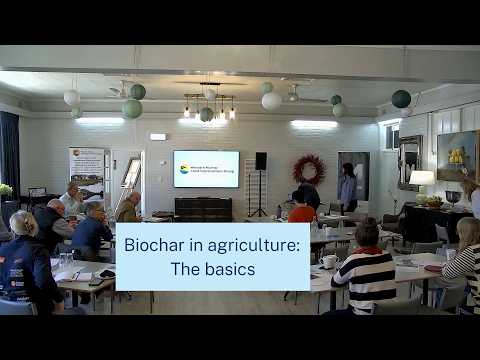
This is a five-minute talk by Emily Wilson, natural capital adviser at Local Land Services NSW, given at a farmer-facing biochar event funded under a NSW decarbonisation program. It’s an extension talk, not a technical presentation — but it’s a reasonably precise snapshot of how biochar intersects with Australian carbon crediting right now. Video: https://www.youtube.com/watch?v=mx6J74S07xk.
The most useful content is the regulatory fine print on soil carbon projects. Biochar application is an eligible activity under Australia’s 25-year soil carbon method, but with two constraints practitioners should have in their heads. First, the carbon contained in applied biochar gets deducted from any measured stock change — “if you put on a tonne of carbon per hectare of biochar and you’ve got three tonnes of increase in soil carbon, then one tonne of that is going to be deducted.” So the credited gain has to come from priming or productivity effects, not the char itself. Second, application is capped at 100 kg/ha/yr unless the feedstock comes from within your own project boundary or a designated waste stream — a leakage safeguard that materially limits third-party biochar sales into soil carbon projects.
The second thread is the method gap. Australia’s Emissions Reduction Fund / ACCU scheme has no biochar method, so producers wanting credits go to voluntary international standards — Wilson name-checks Puro.earth, where a local facility (Melissa’s, referenced from an earlier session) plans to register. Her pricing is worth noting: roughly AU$150–200 per Puro CO₂ Removal Certificate versus AU$40–50 for an ACCU. She’s appropriately agnostic on whether the premium reflects permanence or just international buyer access. The odd structural consequence she flags: because these are voluntary international credits, the removals can’t count toward Australia’s national inventory — a small illustration of the Article 6 / national accounting friction that keeps coming up in country-level CDR policy.
For broader context: this sits alongside the ongoing push for a domestic biochar method under Australia’s ACCU scheme, and the general pattern of biochar being the workhorse of delivered durable removals on registries like Puro while remaining invisible in most compliance systems. The end-use traceability requirement Wilson mentions — verifying the char isn’t burned as a coal substitute — is the same reversal-risk logic that biochar Monitoring, Reporting and Verification (MRV) debates have circled for years, here stated plainly for a farm audience.
Worth ten minutes if you work on Australian biochar projects, soil carbon method design, or feedstock-sourcing rules; skip if you already know the ACCU/Puro landscape.