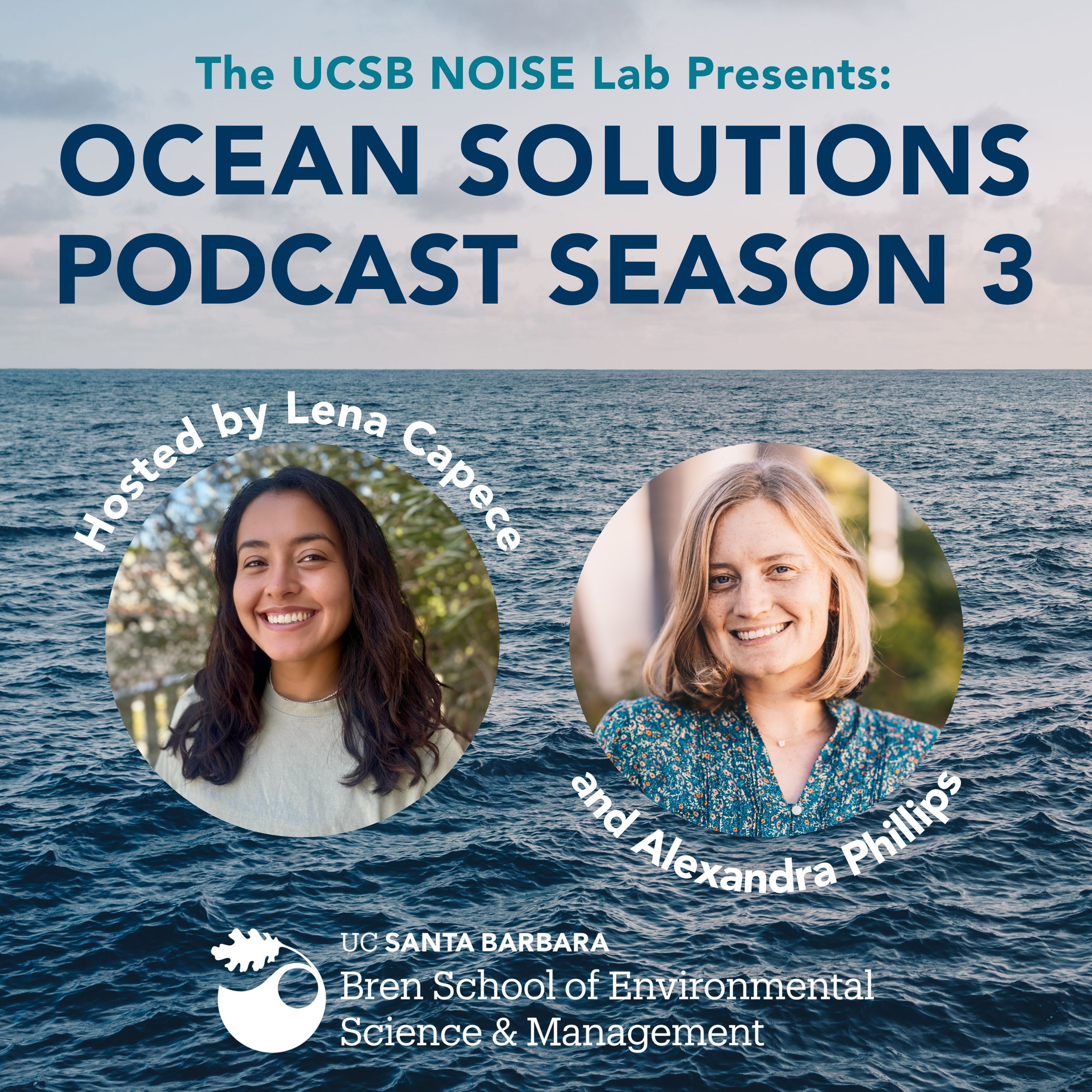
Take on a podcast episode from Ocean Solutions: a NOISE Lab podcast, originally published Wed, 30 Se. Listen: https://soundcloud.com/morgan-reed-raven/season-3-episode-8-ocean
TL;DR
- LOC-NESS, the first EPA-permitted ocean alkalinity enhancement trial, ran in August in the Gulf of Maine: 6-hour dispersal, 4 days of ship monitoring.
- Subhas says they have direct measurements of atmospheric CO2 uptake — “tons” over 4 days, error bar still pending. No headline number yet.
- No measurable biological impacts detected in the plume. Useful, but it’s one summer patch; don’t over-read it.
- Rhodamine dye made the patch visible from NASA satellites — a genuinely interesting measurement, reporting, and verification angle.
- WHOI deliberately kept the project off the voluntary carbon market; Subhas tells startups to be explicit about financial motives.
Ocean Solutions (a NOISE Lab podcast out of UC Santa Barbara’s Bren School) hosts Lena Capece and Alexandra Phillips interview Adam Subhas, associate scientist at Woods Hole Oceanographic Institution and project lead for LOC-NESS (Locking away Ocean Carbon in the Northeast Shelf and Slope). The episode is a plain-language walk through what ocean alkalinity enhancement is, how the Wilkinson Basin trial was actually executed, what the preliminary results show, and how the team handled fishermen, Indigenous groups, and a split public comment record. Listen here.
The operational detail is the useful part. The trial ran about 60 miles off Boston/Quincy with two vessels: a dispersal ship carrying the sodium hydroxide solution plus EPA, fishing-industry, and protected-species observers, and a research vessel tracking the wake in real time to confirm pH stayed within permit limits. Alkalinity was laid down in a spiral over roughly six hours, co-dosed with rhodamine tracer dye, then followed for four days as it dispersed. Subhas says the timing wasn’t incidental: summer stratification keeps the alkalinized layer at the surface and in contact with the atmosphere, which is the whole game for ocean alkalinity enhancement — the carbon doesn’t count until air-sea exchange actually happens. On results: “we can confidently say that this patch of water did take up CO2 from the atmosphere, and we’re working to put an actual error bar on that number.” That the uptake was derived from both ship data and satellite fluorescence is the notable claim; that the quantity is still just “tons” is the gap practitioners will want closed when the papers land.
The second substantive thread is positioning. Subhas frames alkalinity-stored bicarbonate as roughly 100,000-year durability against the years-to-century leakage of biological-pump approaches — standard framing, but worth hearing from someone who ran the permit. He is explicit that WHOI kept LOC-NESS financially independent of the voluntary carbon market, while acknowledging startups “were some of the first in the water” and that the market is the sector’s largest funder. His advice to those companies — disclose your financial motivations up front, even if people object — is the kind of thing buyers vetting marine carbon dioxide removal suppliers should note. He also says community engagement fed back into the science itself: sampling plans and the use of existing fishing-footprint and larval-fish datasets were shaped by dockside conversations. Public comments, by his account, split roughly half “do the research” and half “don’t mess with the Earth.”
Context: the LOC-NESS project site carries the permit and engagement record referenced in the episode. This trial sits alongside the commercial ocean alkalinity enhancement outfall deployments we’ve covered previously, which have the opposite problem — credits issued, but far less public environmental monitoring. LOC-NESS is effectively the academic control case for what regulated, observer-monitored ocean alkalinity enhancement looks like, and the eventual peer-reviewed uptake number will be the benchmark against which company-reported efficiencies get read.
Useful for anyone doing marine carbon dioxide removal measurement design or due diligence on alkalinity credits; skip the first fifteen minutes of career backstory if you’re short on time.