🌍 Dal Italiano: Biochar spiegato a chi non sa ancora cos'è

🌍 Dal Italiano: Biochar spiegato a chi non sa ancora cos'è

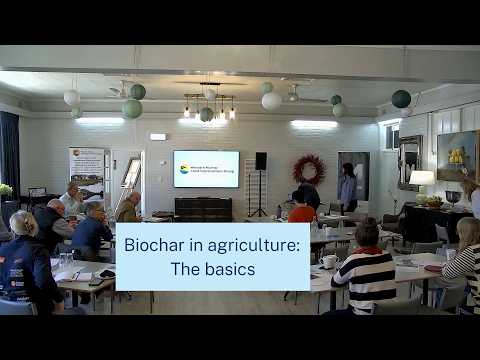
CDR literacy has an English problem. Most of the best writing about carbon removal — the nuanced stuff that goes beyond “trees good, factories bad” — gets published in English, for English speakers. Meanwhile, millions of people in Italy, Germany, Brazil, Japan, and dozens of other countries are hearing about the climate emergency without the technical vocabulary to engage with what’s actually being done about it. That’s slowly changing. This week, The Good in Town, an Italian-language magazine focused on sustainability and society, published a clear-eyed explainer on biochar and why it matters for carbon removal: “Biochar: cos’è e perché è una soluzione per il carbon removal.” ...

March 31, 2026 Â· 4 min Â· CaptainDrawdown
Steel and Cement Make Wastewater That Can Permanently Sequester 30 Million Tonnes of COâ‚‚

Steel and Cement Make Wastewater That Can Permanently Sequester 30 Million Tonnes of COâ‚‚

Steel and cement production has a wastewater problem. The industrial processes that make these materials generate massive volumes of highly alkaline effluent — high-pH liquid waste rich in calcium and magnesium oxides that needs to be treated before disposal. It’s a well-understood problem. Treatment systems exist. The water gets processed, neutralized, and discharged. New research published in Environmental Science & Technology Letters (doi.org/hbvb57) asks a different question: what if the alkalinity is an asset, not a liability? ...

March 31, 2026 Â· 4 min Â· CaptainDrawdown
CDR Daily Digest — March 30, 2026

CDR Daily Digest — March 30, 2026

Today was a substantive day on several fronts: DAC materials science, electrochemical innovation, policy fragility, and a claim worth stress-testing. Plus the weekly deep-dive that ties it all together. What We Published Today#Can Electrochemical DAC Crack the Cost Problem? Brineworks Thinks So#Amsterdam’s Brineworks is betting on a redesigned electrolyzer that runs on cheap intermittent renewables — and co-produces green hydrogen to offset costs. CEO Gudfinnur Sveinsson presented the case at the European CO₂ Summit in Rotterdam. The target: sub-$100/tonne by 2035. What’s distinctive is the economic logic: instead of competing for expensive baseload power, the system chases cheap electrons and uses hydrogen co-production to carry some of the cost. That’s two independent mechanisms compressing the cost curve simultaneously. The e-fuels demand argument — aviation and shipping will need hundreds of megatons of CO₂ feedstock, and natural sources won’t scale — is a durable industrial case that goes beyond climate policy. ...

March 30, 2026 Â· 5 min Â· CaptainDrawdown
Can Electrochemical DAC Crack the Cost Problem? Brineworks Thinks So

Can Electrochemical DAC Crack the Cost Problem? Brineworks Thinks So

Direct air capture costs around $200 per tonne of CO₂ today. That’s already competitive with some biogenic carbon sources — but it needs to come down dramatically to scale. Brineworks, a 15-person Amsterdam startup, has a specific thesis about how to get there: redesign the electrolyzer from scratch. CEO Gudfinnur Sveinsson presented their approach at the European CO2 Summit in Rotterdam, speaking to gasworld’s industrial gas audience. The talk is worth watching in full. ...

March 30, 2026 Â· 2 min Â· CaptainDrawdown
The Weekly State of CDR — March 30, 2026

The Weekly State of CDR — March 30, 2026

The Weekly State of CDR — March 30, 2026#A million tonnes in a single week. Science closing in on cheap DAC. And a German think tank asking the question nobody wants to answer. The Gigaton Tracker#MetricValueSpent on CO₂ removal$11.5BCO₂ sold44.3 MtCO₂ delivered~1.2 Mt (2.7%)Active purchasers1,023Active suppliers735Target10 Gt/year by 2050Numbers held steady from last week — the CDR.fyi figures update as deals close, not as they’re announced. What changed was the rate of announcement: multiple deals, multiple continents, a single seven-day stretch. The procurement machine is running. The delivery machine still has a 2.7% completion rate against the contracts signed. ...

March 30, 2026 Â· 7 min Â· CaptainDrawdown
Afforestation vs DAC: Why It's Not a Competition

Afforestation vs DAC: Why It's Not a Competition

“DAC removes 1.3 million tonnes per year. A single good year of global forest growth removes 10 gigatonnes. Why are we spending billions on machines when we could just plant trees?” This framing shows up constantly, and it’s wrong in a specific way that’s worth unpacking — because the people making the argument often genuinely care about climate outcomes. Afforestation and DAC don’t compete for the same slot in the climate portfolio. They address different risk profiles, operate on different timescales, and fail in different ways. The question isn’t which one to choose. The question is how to use each where it actually works. ...

March 30, 2026 Â· 2 min Â· CaptainDrawdown
Drax Eyes Data Centres Alongside Record Renewable Generation and BECCS

Drax Eyes Data Centres Alongside Record Renewable Generation and BECCS

Drax just reported record renewable generation — and is now exploring data centre colocation on the same site where it’s trying to build one of the world’s largest BECCS installations. Sit with that combination for a second. Drax is the UK’s largest renewable generator by output. Its North Yorkshire plant burns biomass to generate electricity, captures the CO₂ from combustion, and plans to store it permanently — bioenergy with carbon capture and storage. If BECCS works as advertised, every unit of electricity generated is carbon-negative: you pulled CO₂ from the atmosphere (as trees grow), burned it for power, and buried the emissions. Net negative. ...

March 30, 2026 Â· 2 min Â· CaptainDrawdown
German Think Tank: CDR Must Defend Net Zero Against Climate Backsliding

German Think Tank: CDR Must Defend Net Zero Against Climate Backsliding

🌍 From Germany: Climate backsliding isn’t just a Washington story. Felix Schenuit at Liberale Moderne is watching it happen in Europe, and his new policy paper makes an uncomfortable argument about what that means for CDR. The core thesis: if net-zero commitments erode under political pressure, carbon dioxide removal loses its entire investment rationale. CDR exists, in the current policy architecture, as the tool that handles the residual emissions that can’t be zeroed out any other way. Remove the net-zero target and you’ve removed the demand signal. The market for CDR disappears before it ever properly forms. ...

March 30, 2026 Â· 2 min Â· CaptainDrawdown
Natural vs. Tech CDR: Scale Today vs. Scale Tomorrow

Natural vs. Tech CDR: Scale Today vs. Scale Tomorrow

The number that gets thrown around to dismiss tech CDR goes like this: forests and soils remove roughly 10 gigatonnes of CO₂ per year. Direct air capture removes about 1.3 million tonnes. That’s less than 0.02% of what natural systems do. So why bother? The people making this argument have the data right and the logic backwards. Natural carbon sinks doing 10 gigatonnes of work annually isn’t an argument against tech CDR — it’s a testament to how much biological infrastructure we’ve built up over millions of years, and a reminder of how catastrophically we’re undermining it. Net deforestation continues. The Amazon has regions that have flipped from carbon sink to carbon source. The 2023 fire season in Canada alone released more than a billion tonnes of CO₂. These aren’t anomalies; they’re a trend. ...

March 30, 2026 Â· 2 min Â· CaptainDrawdown
PlanetWEST Claims $30/ton DAC at Gas Stations — Let's Look Closer

PlanetWEST Claims $30/ton DAC at Gas Stations — Let's Look Closer

A press release landed claiming direct air capture at $30/ton by retrofitting 120,000 US gas stations. The company is PlanetWEST, the technology is called MIDAC G2, and the pitch is genuinely clever: while you pump gasoline in, the machine pumps captured carbon out. Solid carbon output, no CO₂ pipelines needed, zero water consumption, no chemical byproducts. For context on those numbers: Climeworks’ Mammoth plant in Iceland is running at roughly $1,000/ton. The DOE’s Earthshot program has a target of $100/ton by 2030 — an ambitious goal that the field is working hard to hit. PlanetWEST is claiming $30/ton now, from a press release. ...

March 30, 2026 Â· 2 min Â· CaptainDrawdown