Podcast take: Brineworks: From “Magic Box” to Upgraded Suit | CO₂ + H₂ for E-Fuels

Take: Brineworks: From “Magic Box” to Upgraded Suit | CO₂ + H₂ for E-Fuels

Take on a podcast episode from Bite-Size Climate Tech, originally published Sun, 30 Au. Listen: https://podcasters.spotify.com/pod/show/lydiaclinzi/episodes/Brineworks-From-Magic-Box-to-Upgraded-Suit--CO--H-for-E-Fuels-e3o34o3 TL;DR Brineworks pivoted from direct ocean capture to a closed-loop land-based system using purchased salt + reverse-osmosis water. Bigger addressable market, but loses the “ocean is free feedstock” story. Co-produces CO₂ and hydrogen from one electrochemical pH-swing box — pitched as the differentiator vs. other electrochemical direct air capture players optimizing purely for energy efficiency. Cost targets: sub-$200/t CO₂ by 2030, near $100/t by 2035. Aggressive but in the same range peers are quoting. Explicitly designed for intermittent operation (20-50% capacity factor) on cheap solar/wind — a design choice worth taking seriously. Target customer is e-fuel project developers, not carbon removal buyers. This is really a feedstock company now, not a durable removal company. Lydia Clinzi hosts Joel Parman, CTO and co-founder of Brineworks, returning to Bite-Size Climate Tech two years after his first appearance. The episode covers Brineworks’ pivot from direct ocean capture to a land-based closed-loop electrochemical system that co-produces CO₂ and green hydrogen for synthetic fuels. ...

September 10, 2026 · 3 min · CaptainDrawdown
Podcast take: Gijsbrecht Gunter (Yara) over de businesscase van Nederlandse CO2 in de Noorse b

Take: Gijsbrecht Gunter (Yara) over de businesscase van Nederlandse CO2 in de Noorse bodem

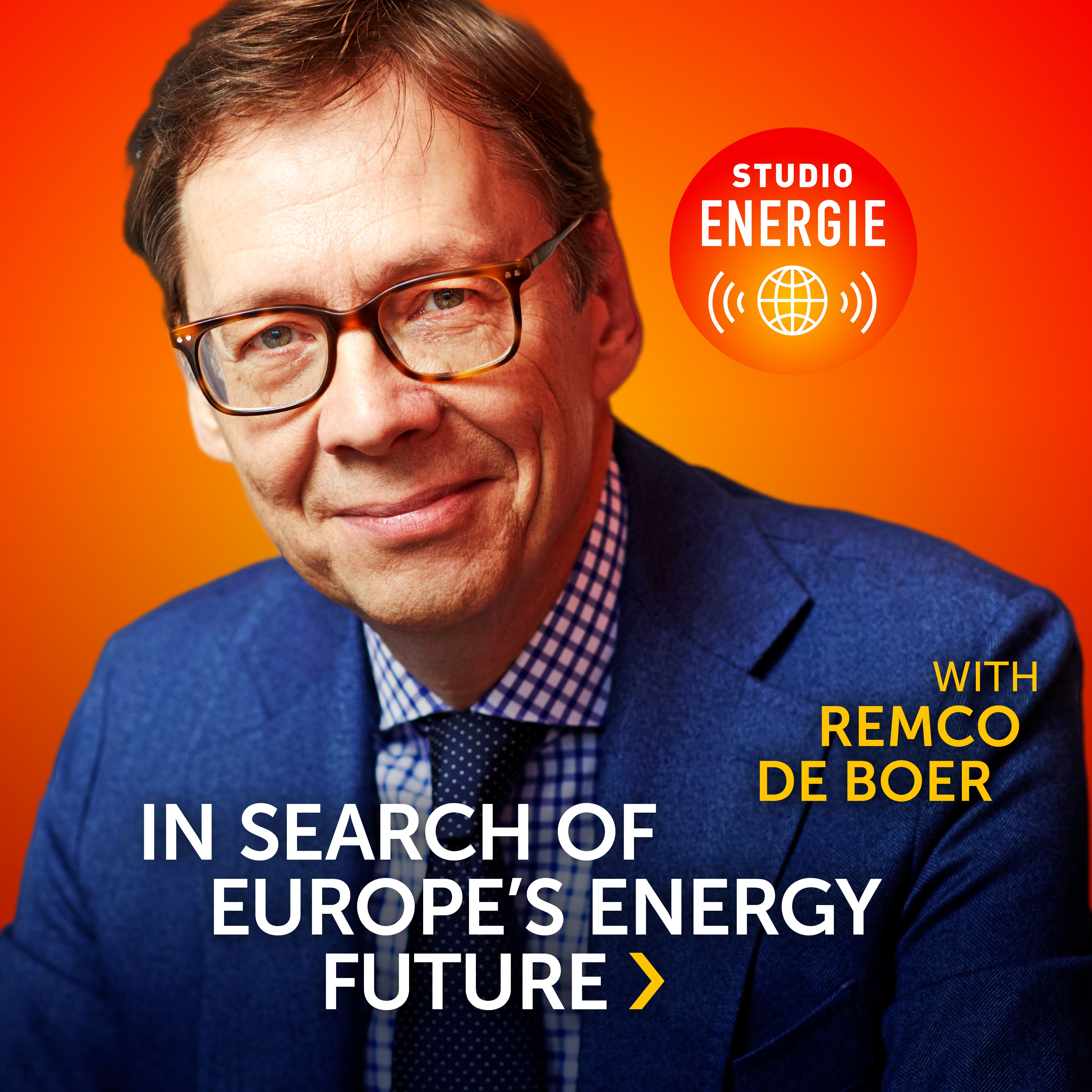
Take on a podcast episode from Studio Energie, originally published Tue, 08 Se. Listen: https://soundcloud.com/studio-energie/gijsbrecht-gunter-yara-over-de-businesscase-van-nederlandse-co2-in-de-noorse-bodem TL;DR First cross-border CCS chain in the world went live: 800 kt/yr CO2 from Yara Sluiskil shipped to Northern Lights in Norway, 15-year contract, ~12 Mt total. Yara’s site director admits on-record the project doesn’t pencil at current ETS (~€85/t); needs a premium plus avoided carbon costs to close. Netherlands scrapping its national CO2 surcharge on top of ETS actively worsens the business case for the front-runner — Gunter says the FID likely wouldn’t be taken today under current conditions. Useful concrete cost benchmark: RED III-compliant green hydrogen for their ammonia would imply ~€15,000 per ton CO2 avoided. Damning number, first time I’ve seen it stated this cleanly. CAPEX ~€200M on Yara’s side; contract with Northern Lights “a multiple” of that. Not disclosed further. Remco de Boer (Studio Energie) interviews Gijsbrecht Gunter, director at Yara Sluiskil, on opening day of the first cross-border CCS chain — Dutch ammonia CO2 liquefied, shipped 800 km, injected under the Norwegian seabed via Northern Lights. In Dutch. The conversation is unusually candid about the economics, which is why it’s worth an hour. ...

September 10, 2026 · 3 min · CaptainDrawdown
Podcast take: MEP Peter Liese: the Rapporteur's take on removals in the EU ETS

Take: MEP Peter Liese: the Rapporteur's take on removals in the EU ETS

Take on a podcast episode from The CDR Policy Scoop, originally published Tue, 08 Se. Listen: https://shows.acast.com/the-cdr-policy-scoop/episodes/mep-peter-liese-the-rapporteurs-take-on-removals-in-the-eu TL;DR Liese wants Parliament to pull removals integration forward to 2028, not the Commission’s 2031 — big signal for offtake timing. He argues for scrapping the cap on removal volumes in the ETS; if costs fall like solar did, why limit uptake. Bold, will meet resistance. Wants biochar added to eligible methods alongside DACCS and BECCS, capped ~20% max. First MEP I’ve heard commit to this on record. If the CDR-cost gap is bigger than the Commission modeled, his fix is to issue more allowances to fund the shortfall. Novel mechanism. Backs a strong link to the CRCF and wants removals inside the international-credits envelope — Namibia cement plant DACCS as concrete example. Hosts Sebastian Manhart and Eve Tamme get Peter Liese — the European People’s Party MEP who is Parliament’s rapporteur on the current EU ETS (Emissions Trading System) revision — on the record days before his draft report drops on 11 September 2026. The conversation is a near-exhaustive walk through what Parliament’s amendments to the Commission’s July 2026 removals-in-ETS proposal could look like. ...

September 10, 2026 · 3 min · CaptainDrawdown
Podcast take: Removals, avoidances, and what Wendell Berry thought of making tonnes fungible

Take: Removals, avoidances, and what Wendell Berry thought of making tonnes fungible

Take on a podcast episode from Reversing Climate Change, originally published Thu, 03 Se. Listen: https://podcasters.spotify.com/pod/show/reversingclimatechange/episodes/Removals--avoidances--and-what-Wendell-Berry-thought-of-making-tonnes-fungible-e3o9d89 TL;DR Ross Kenyon’s solo reflection on Wendell Berry’s death, wrapped around an essay he wrote for Removr on removals vs. avoidances in one portfolio. Mea culpa: Nori tried to build a “better” registry from scratch; Kenyon now says the convergence of legacy registry designs is structural, not a willpower failure. Useful concession. Argues durable CDR’s cultural separatism from the broader voluntary carbon market has become a liability, not a moat. Fair, and increasingly the consensus. Would pick rainforest protection over carbon removal if forced to choose. Provocative framing, thinly defended. Name-checks Martin Freimüller (Octavia) and Robert Höglund as CDR-side voices moving toward portfolio thinking. Signal for where the discourse is drifting. Ross Kenyon, Nori cofounder and long-running host of Reversing Climate Change, delivers a solo episode (link) that pairs an obituary for Wendell Berry with a piece he wrote for the Removr registry on why durable removals and avoidances belong in the same portfolio conversation. It’s part personal essay, part market commentary — you’ll get more of the former than the latter. ...

September 3, 2026 · 3 min · CaptainDrawdown
Podcast take: Somebody here needs to say this before an investigative journalist does. I’d rat

Take: Somebody here needs to say this before an investigative journalist does. I’d rather it be one of us.

Take on a podcast episode from Carbon Removal Newsroom, originally published Tue, 01 Se. Listen: https://climateworkersanonymous.com/p/11-somebody-here-needs-to-say-this TL;DR Anonymous submitter argues artisanal biochar gets a scrutiny pass that industrial projects don’t — and that gap is where bad actors are hiding. Sharp, overdue take. Specific red flag: daily production logs on public registries showing identical output across monsoon and dry season. Concrete, checkable, damning if true. dMRV (digital measurement, reporting, verification) providers check data completeness/format, not plausibility against public rainfall records. That’s a real registry gap. Water-for-quench competing with irrigation water in rain-scarce regions — a farmer-cost story the “farmer-first” crowd doesn’t tell. First ~15 minutes is Ross’s AI-doom monologue. Skip to the submission unless you want that too. Ross Kenyon’s Climate Workers Anonymous publishes anonymous submissions from climate workers. This episode’s submission is a pointed critique of artisanal biochar carbon credits from someone who’s clearly been reading registry data. The first ~15 minutes is Ross editorializing about artificial general intelligence and Stripe’s “singularity is here” investor memo — you can skip to the submission without loss. ...

September 3, 2026 · 3 min · CaptainDrawdown
Podcast take: What is really happening to DAC Hubs? - with Grant Faber

Take: What is really happening to DAC Hubs? - with Grant Faber

Take on a podcast episode from The CDR Policy Scoop, originally published Tue, 01 Se. Listen: https://shows.acast.com/the-cdr-policy-scoop/episodes/what-is-really-happening-to-dac-hubs-with-grant-faber TL;DR Only ~2.5% of the original $3.5B DAC Hubs budget has been disbursed; contract negotiation ate most of the Biden term before terminations froze things. $1B of hub funding was reprogrammed by Congress to nuclear; ~$1.3B sits unobligated but not rescinded — dormant, not dead. DOE admitted in court that project terminations were chosen on political basis; cancellations skewed toward blue-headquartered primes even when projects sat in red states. Both TA3 megahubs (Project Cypress, South Texas) survived the retention list — Grant credits BIL/IRA’s deliberate red-district geography strategy. Grant’s speculative but useful scenario: unspent CDR appropriations pile up, and 2029 brings a sudden multi-billion-dollar “we’re back” moment. Take with salt. Grant Faber — former DAC Hubs program manager at DOE’s Office of Fossil Energy and Carbon Management, now Head of Standards at Absolute Climate — joins Eve Tamme and Sebastian Manhart on The CDR Policy Scoop to walk through his recent Substack article mapping the actual state of the US DAC Hubs program. This is the most granular public accounting of what survived, what got killed, and what’s still sitting in an account somewhere. ...

September 3, 2026 · 3 min · CaptainDrawdown
Podcast take: #10: hype and a gold rush followed by contraction and consolidation

Take: #10: hype and a gold rush followed by contraction and consolidation

Take on a podcast episode from Carbon Removal Newsroom, originally published Tue, 25 Au. Listen: https://climateworkersanonymous.com/p/10-hype-and-a-gold-rush-followed TL;DR Anonymous submission argues carbon dioxide removal (CDR) is living out a textbook boom-bust: 2022-2024 gold rush, now contraction. Not novel, but fairly stated. Frames CDR as commodity-like and therefore structurally cyclical, with hoped-for upward trendline. Reasonable analogy, understates policy-driven demand fragility. Prescription: counter-cyclical discipline at the individual/company level — conservative in booms, patient in busts. Sensible but generic. Kenyon’s own gloss: blaming “macro conditions” explains everything and nothing; entrepreneurs are supposed to trim sails. Useful pushback. Bonus tangent: Stripe’s Collisons reportedly calling “singularity” internally — Kenyon wonders what that means for CDR buyers. Speculative but worth noting. Ross Kenyon’s Climate Workers Anonymous #10 runs a single anonymous submission on the CDR business cycle: how a 2022-2024 hype phase drove overexpansion, and how the current contraction is the predictable other side of that same coin. Kenyon reads the submission, then layers on his own commentary about founders using “macro conditions” as a catch-all excuse and about what a nearer-than-expected AI capability jump might mean for CDR buyer behavior. ...

August 27, 2026 · 3 min · CaptainDrawdown
Podcast take: Canada’s Next Industrial Play: What It Takes to Earn a Farmer’s Yes

Take: Canada’s Next Industrial Play: What It Takes to Earn a Farmer’s Yes

Take on a podcast episode from The Carbon Curve, originally published Wed, 26 Au. Listen: https://carboncurve.substack.com/p/canadas-next-industrial-play-what TL;DR Miniseries opener framing carbon removal as a layer on Canada’s $1T industrial buildout ahead of Carney’s September investment summit — useful political framing. Jim Mann (UNDO) claims enhanced rock weathering on farmland accelerates natural weathering “50 to 100,000 times” — the upper bound feels rhetorical, but the mechanism is standard. UNDO’s model: give crushed silicate to farmers free, cover transport and spreading, keep all carbon revenue. Farmer-adoption pragmatism, not revenue-sharing idealism. Mann’s claim: Canada’s 100–300 Mt/yr residual removal need “could all be done with enhanced rock weathering.” Overstated, but the feedstock-plus-farmland argument is real. CFA’s Brody Berrigan on why adoption stalls: farmers are business owners first, extension services have been gutted since the ’90s, neighbor-to-neighbor is the real diffusion channel. Na’im Merchant kicks off a Carbon Curve miniseries on embedding durable carbon dioxide removal into Canadian industrial projects, timed to Prime Minister Carney’s September 14-15 investment summit. Episode here. Episode one pairs UNDO founder Jim Mann on enhanced rock weathering economics with the Canadian Federation of Agriculture’s Brody Berrigan on what it actually takes to get Prairie farmers to say yes. ...

August 27, 2026 · 3 min · CaptainDrawdown
Podcast take: What Does CDR Actually Cost in Europe? - with Hansjörg Lerchenmüller and Eadbhar

Take: What Does CDR Actually Cost in Europe? - with Hansjörg Lerchenmüller and Eadbhard Pernot

Take on a podcast episode from The CDR Policy Scoop, originally published Sun, 23 Au. Listen: https://shows.acast.com/the-cdr-policy-scoop/episodes/what-does-cdr-actually-cost-in-europe-with-hansjorg-lerchenm TL;DR Commission’s ETS review cost forecasts for durable CDR trace to just four sources (McKinsey 2023, Ramboll Ecologic 2025, NEGEM 2023, CDR.fyi 2023) — thinner foundation than the policy weight implies. Bio-CCS low-cost anchor of €172/t leans on €165/t of assumed energy revenue and calibration against an unverifiable 2022 Drax conference remark. Overstated confidence. direct air carbon capture and storage (DACCS) range comes entirely from a black-box McKinsey report; no inspectable assumptions on energy, T&S, or learning rate. Useful flag. Biochar low bound (€37–66/t) reflects Global South artisanal systems; Hansjörg says European scalable price is €175–200/t. First-time-cited industry number worth having. Practical asks: modelers should use current CDR.fyi data, be transparent about assumptions, and suppliers should submit transaction data. Signal-dense. Eve Tamme and Sebastian Manhart host Eadbhard Pernot (Carbon Management Europe) and Hansjörg Lerchenmüller (Biochar Europe) to stress-test the cost assumptions behind the European Commission’s July 2026 ETS review impact assessment. The episode walks through bio-CCS, DACCS, and biochar carbon removal cost curves line by line — where the numbers actually come from, and where they fall apart. ...

August 27, 2026 · 3 min · CaptainDrawdown
Podcast take: #9: it feels like there’s nobody to celebrate with if the whole industry is hurt

Take: #9: it feels like there’s nobody to celebrate with if the whole industry is hurting

Take on a podcast episode from Carbon Removal Newsroom, originally published Tue, 18 Au. Listen: https://climateworkersanonymous.com/p/9-it-feels-like-theres-nobody-to TL;DR Anonymous submission from a CDR (carbon dioxide removal) operator saying their company is growing fine while peers struggle — a rare “we’re okay” voice in a bruised market. Submitter’s real complaint: large incumbents going silent instead of continuing to build publicly at smaller scale, making bad sentiment self-fulfilling. Fair critique. Format is anonymous, unverified single-submission — no numbers, no company names, no verifiable claims. Signal is emotional, not analytical. Ross Kenyon’s framing (“corporeal man at the feast for ghosts”) is evocative but this is a ~10-minute mood piece, not reporting. Skip if you want data. Worth 10 minutes if you want a read on morale inside CDR right now. Episode link. Ross Kenyon (of Reversing Climate Change) runs Climate Workers Anonymous, a Substack/podcast collecting unverified anonymous submissions from people working in climate. Episode #9 is one submission, read aloud with brief commentary: a CDR operator saying their company is doing well, feels awkward saying so, and wishes their struggling peers would keep building in public instead of going dark. ...

August 20, 2026 · 3 min · CaptainDrawdown